
Hosting an au pair in Canada? Here’s how payroll works
An au pair is a cultural exchange for your family and a job for the person who moves in. You agree on a schedule, a weekly amount, and a room in your home. What many host families miss is the payroll side: once you set the hours and direct the work, the CRA generally treats you as an employer. That means a CRA payroll account, real deductions, and a pay stub with every payment.
This guide covers au pair payroll for host families in Canada step by step: who counts as the employer, how room and board fits in, what to withhold and remit, and what paying an au pair in Canada really costs. RoostPay calculates the numbers each pay run so you are not working out au pair taxes in Canada by hand.
No charges for 30 days · Cancel anytime
Six steps to paying an au pair correctly
Here is the whole process in order. Each step links to the section that explains it.
| Step | What you do | Where to read more |
|---|---|---|
| 1 | What you do Confirm you are the employer | Where to read more Are you the employer of your au pair? → |
| 2 | What you do Register a CRA payroll account | Where to read more Getting your CRA payroll account set up → |
| 3 | What you do Set wage, hours, and room and board rules | Where to read more Wage, hours, and overtime → |
| 4 | What you do Withhold each payday and remit on the CRA schedule | Where to read more What you’ll withhold, and when you remit → |
| 5 | What you do Handle taxable benefits, vacation, and year-end slips | Where to read more Taxable benefits, vacation pay, and year-end slips → |
| 6 | What you do Put the agreement in writing | Where to read more Put it in writing → |
Are you the employer of your au pair?
The CRA decides this from the whole working relationship. Hiring your au pair, setting their hours, and directing the work are strong signs that you are the employer. No single fact settles it. Outside Quebec, the CRA also looks at who supplies the tools, whether they can send someone else to do the work, and who carries the financial risk. In Quebec, the question is whether they work under your direction.
If that is your household, you are generally the employer. That stays true even if an agency introduced you and you pay the au pair directly.
Getting your CRA payroll account set up
Once you know you are the employer, register for a CRA payroll program account under a Business Number. That account is what lets you remit CPP, EI, and income tax to the CRA. Our guide on getting a CRA Business Number for a caregiver walks through the steps, and the same steps apply to a host family paying an au pair.
Register for au pair payroll before your au pair’s first payday so every payment from day one has a pay stub and a record.
Wage, hours, and overtime for an au pair
Your au pair is an employee, so your province’s employment standards apply: minimum wage, overtime, hours of work, breaks, and statutory holidays. Agree on an hourly rate or a weekly amount in writing, and make sure it works out to at least minimum wage for the hours your au pair actually works.
Some provinces treat live-in domestic workers differently for hours of work and overtime. Read your province’s rules for live-in workers before you set the schedule. For a worked example of how one province handles overtime, see BC overtime rules for domestic workers .
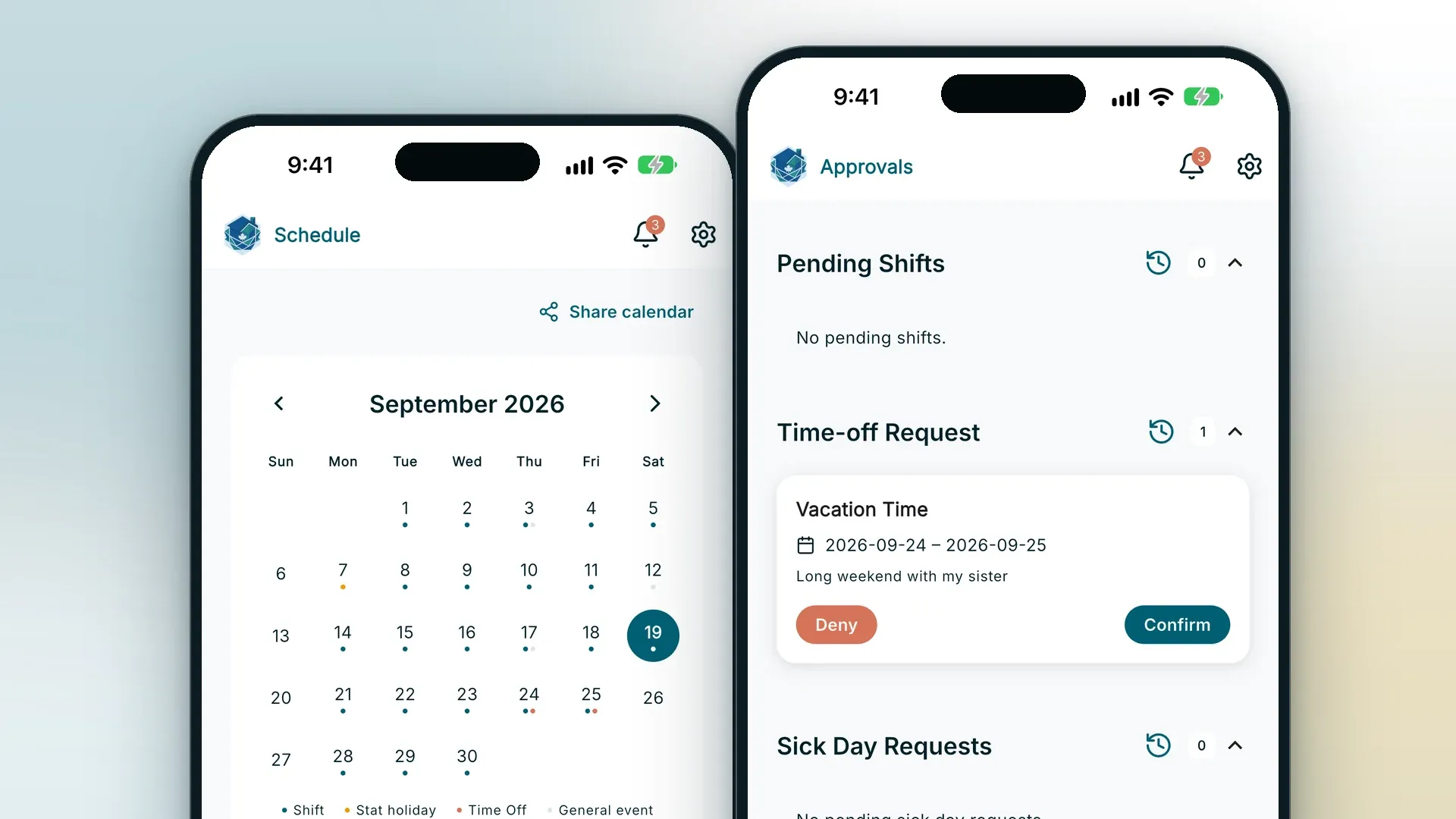
Keep a record of scheduled hours, hours worked, and off-duty time. Those records drive overtime, vacation pay, and every pay stub.
Room and board for your au pair
Room and board deductions for an au pair are two separate ideas that people tend to mix up. One changes net pay. The other changes taxable pay.
| Concept | What it is | How it affects payroll |
|---|---|---|
| Deduction from pay | What it is Money you take off net pay for lodging or meals, only when the visa and your province allow a charge | How it affects payroll Lowers the cash you pay. This is what your au pair pays you. It is not added to their income. |
| Taxable benefit | What it is Fair market value of the room or meals, minus what your au pair pays you | How it affects payroll Added to their income before CPP, EI, and income tax, then reported on the T4. If they pay fair market value, this amount is zero. |
Show the deduction as its own line on the pay stub. Keep the taxable benefit separate. The CRA taxes the fair market value of the lodging and meals, minus what your au pair pays, and that benefit goes on the T4. Our guide to nanny taxes walks through the same idea for a live-in nanny.
On the pay run, you review any room and board charge before you finalize. If the visa does not allow a charge, that amount stays at zero.
Taxable benefits, vacation pay, and year-end slips
Room and board is not the only non-cash perk host families provide. A phone plan, a transit pass, and language classes or tuition you pay for can count as taxable benefits when they mainly benefit your au pair. The CRA decides how a specific perk is treated, so ask the CRA or an accountant before you assume it is tax free.
Keep a note of anything non-cash you provide, with dates and amounts, so your year-end totals are right.
Vacation, statutory holidays, T4, and ROE
Your province’s employment standards set the rules on vacation pay, statutory holidays, and what has to appear on a pay stub. Keep records from the first pay period.
- Every payday: give your au pair a pay stub
- At year-end: issue a T4 to your au pair by the end of February
- When the placement ends: issue a Record of Employment (ROE) if the work was insurable, whether or not they apply for EI
Our guide to filing a T4 slip for a nanny or caregiver covers the boxes and deadlines, and the same steps apply to an au pair. For what a compliant stub must show, see pay stubs for domestic employers .
What you’ll withhold, and when you remit
When your au pair’s pay is pensionable and insurable, you withhold their CPP and EI on each payday. You add employer CPP at the same rate, and employer EI at 1.4 times their premium. Income tax comes off the same paycheque when it applies. You send the withheld amounts and your employer shares to the CRA together. Withholding happens on payday. A new payroll account usually remits quarterly, on April 15, July 15, October 15, and January 15, while each month’s withholdings stay under $1,000. If a month reaches $1,000, or the CRA assigns a different schedule, you remit by the 15th of the next month.
| Contribution | Withheld from your caregiver | You pay as the employer | Applies to |
|---|---|---|---|
| CPP (Canada Pension Plan) | Withheld from your caregiver 5.95% | You pay as the employer 5.95% | Applies to Pay up to $74,600 a year, after a $3,500 basic exemption |
| CPP2 (second CPP contribution) | Withheld from your caregiver 4% | You pay as the employer 4% | Applies to Pay above $74,600, up to $85,000 a year |
| EI (Employment Insurance) | Withheld from your caregiver 1.63% | You pay as the employer 2.282% | Applies to Insurable earnings up to $68,900 a year. Employer EI is 1.4 times the employee premium, not a matching share. CPP and CPP2 are the same rate for both of you. |
2026 federal rates, outside Quebec. Quebec uses reduced EI rates and QPIP, so confirm current figures with the CRA before you remit.
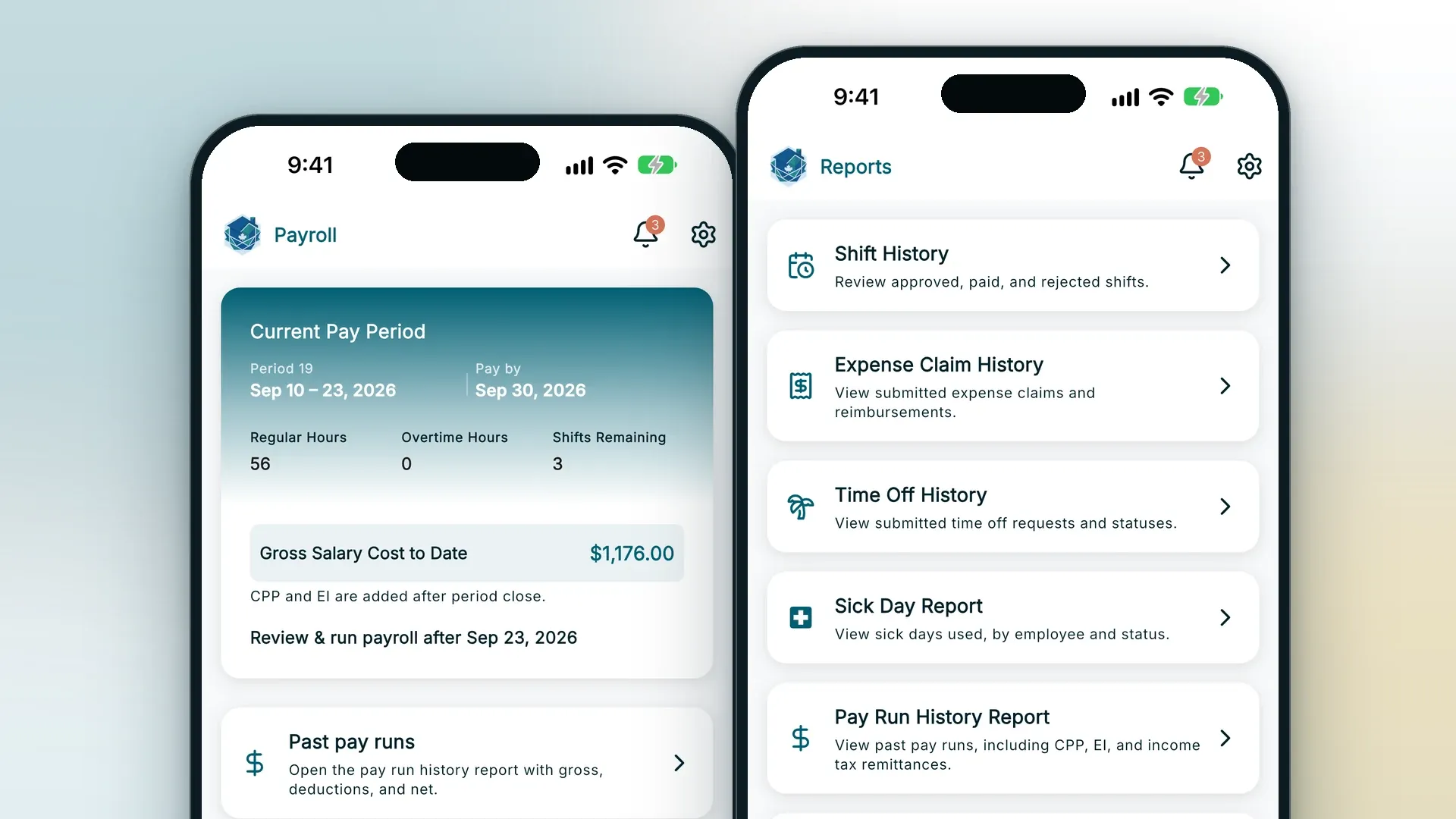
RoostPay calculates each pay run, including the amount to pay your au pair and the amount to send the CRA. You still pay your au pair, and you still remit on the CRA due date yourself.
Put it in writing
A short written agreement protects you and your au pair. Cover the duties, weekly schedule, off-duty time, wage or weekly amount, pay frequency, vacation, notice, house rules, and exactly what room and board covers.
Your agreement should match what you pay. When the agreement and the pay stub tell the same story, tax time and any later questions about hours or pay are much simpler for you and your au pair.
Au pair vs nanny: what changes for payroll
From a payroll view, hosting an au pair and hiring a nanny are both domestic employment. The main difference is that room and board comes up far more often with an au pair.
| Question | Au pair | Nanny |
|---|---|---|
| Are you the employer? | Au pair Generally yes, when you hire, set the hours, and direct the work | Nanny Generally yes, on the same three-part test |
| CRA payroll account, CPP, EI, income tax | Au pair Yes, calculated the same way | Nanny Yes, calculated the same way |
| Room and board | Au pair Comes up often, because most au pairs live with the host family | Nanny Comes up only for a live-in nanny |
| Pay stubs and T4s | Au pair Required | Nanny Required |
If you are also comparing a nanny, our nanny payroll in Canada page covers the same tools for childcare.
What an au pair costs beyond the paycheque
Whatever you agree as an au pair salary in Canada, budget more than that number. On top of gross pay, plan for:
- Employer CPP and EI
- Vacation pay
- Workers’ compensation, where your province requires it
- The room and board you provide, which costs you even when it reduces cash pay
Any fees you pay to an agency sit outside payroll, so add them separately. To see your employer cost from an hourly wage, use the nanny tax calculator . It has a live-in option with a room and board field, so you can see how that changes the numbers.
How RoostPay Helps with Au Pair Payroll and Pay Stubs
-
RoostPay handles
Payroll calculations (wages, CPP, CPP2, EI, income tax, vacation pay)You stay in charge
Pay your au pair from your own bank account -
RoostPay handles
Deduction and remittance amountsYou stay in charge
Remit those amounts to the CRA yourself -
RoostPay handles
Pay stubs, T4s, and ROEs. A room and board charge only when the visa and province allow itYou stay in charge
Workers’ comp registration if it applies, and confirming the charge before you finalize -
RoostPay handles
One flat plan for multiple employees ($24/mo or $228/yr, unlimited employees)You stay in charge
Your written agreement, and work permit questions with IRCC
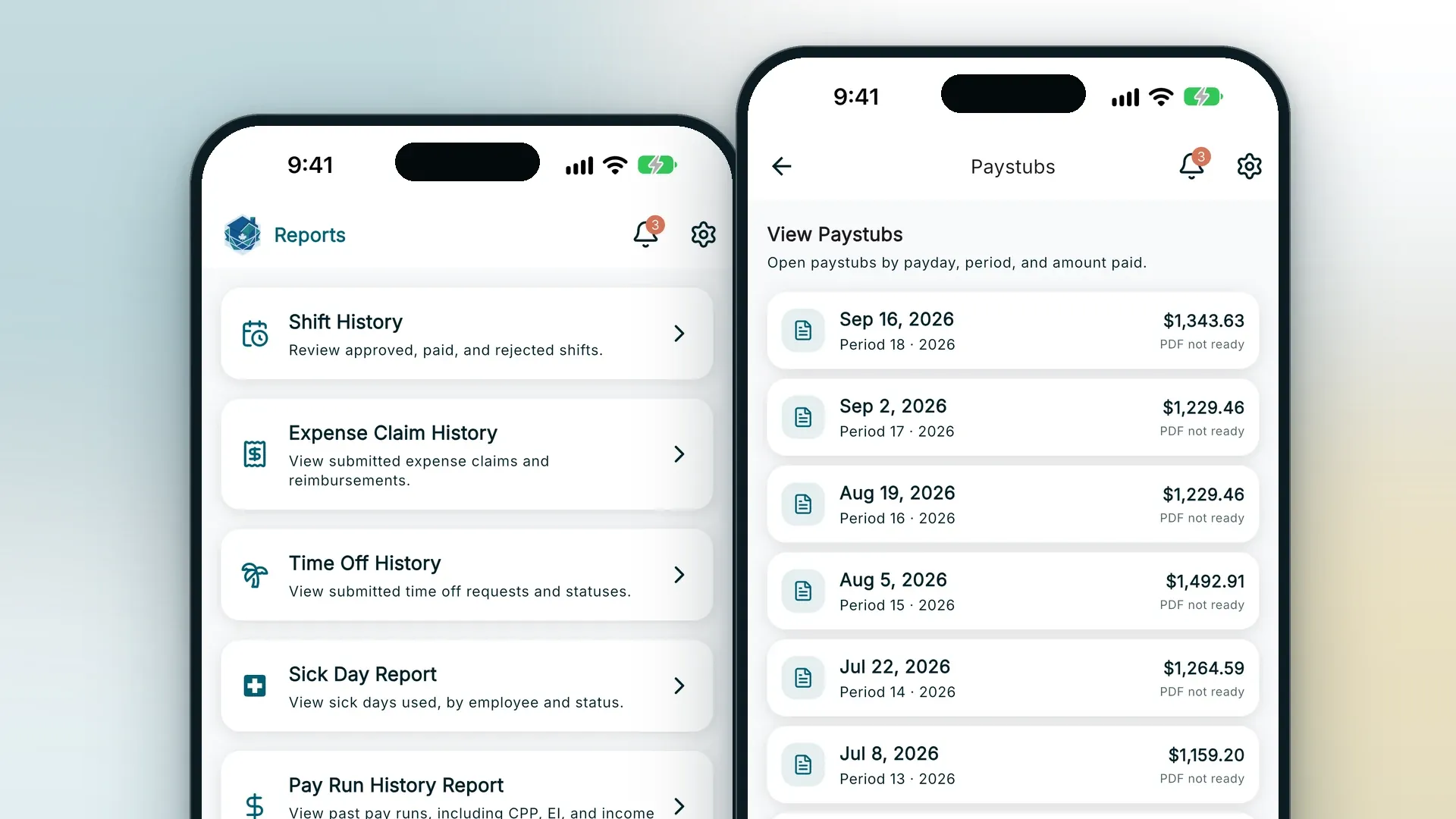
RoostPay works out the exact amounts and gives you pay stubs, T4s and ROEs, so you pay your au pair by e-Transfer or through your own bank and remit to the CRA.
See what RoostPay costs for one au pair or several employees.
RoostPay pricingRelated host family payroll guides
Run payroll for your au pair without the spreadsheet
One plan, unlimited employees. $24/month or $228/year.
No charges for 30 days · Cancel anytime
Not ready to start? Get host family payroll tips by email.
Get RoostPay Insights newsletter
Frequently asked questions
Is an au pair an employee in Canada?
Usually yes. If you hire the au pair, set their hours, and direct the work in your home, the CRA generally treats you as their employer. Calling the weekly amount a stipend does not change that. Ask the CRA for a ruling if you are unsure.
Do I need a CRA Business Number to pay an au pair?
If you are the employer, yes. Register a CRA payroll program account under a Business Number so you can withhold and remit CPP, EI, and income tax when they apply, and issue pay stubs and a T4.
Can I pay my au pair a stipend instead of a wage?
You can agree on a weekly or monthly amount, but it is still pay for work. Your province’s employment standards, such as minimum wage and overtime, and your payroll deductions still apply. Make sure the amount works out to at least minimum wage for the hours your au pair actually works.
Can I deduct room and board from my au pair’s pay?
Sometimes. Some visas do not allow a room and board charge at all, including a Temporary Foreign Worker Program caregiver who lives in your home. RoostPay asks for visa status and will not apply a charge the visa forbids. When a charge is allowed, your province sets the maximum you can take off net pay. Any taxable benefit is a different amount: the fair market value of the lodging and meals, minus what your au pair pays.
Do I have to pay an au pair overtime in Canada?
Overtime rules come from your province’s employment standards, and some provinces treat live-in domestic workers differently for hours of work and overtime. Read your province’s rules for live-in workers, and keep a record of the hours your au pair works so your pay runs match.
Does my au pair’s work permit change how I run payroll?
Payroll follows the hours your au pair actually works and the pay you agreed. What a work permit allows, including any hour limits, is an immigration question. Check with IRCC or a licensed immigration advisor.
What is the difference between au pair payroll and nanny payroll?
The payroll steps are the same kind of domestic employment: a CRA payroll account, CPP, EI, income tax, pay stubs, and a T4. Room and board comes up more often with an au pair because most live with the host family.
How much does an au pair cost beyond their pay?
More than the agreed amount. You are also responsible for employer CPP and EI, vacation pay, and possibly workers’ compensation, plus the room and board you provide. The nanny tax calculator shows your true employer cost from an hourly wage.
Does RoostPay pay my au pair or send money to the CRA for me?
RoostPay works out the exact amounts and gives you pay stubs, T4s and ROEs, so you pay your au pair by e-Transfer or through your own bank and remit to the CRA.
Sources
- CRA, employing a caregiver, baby-sitter, or domestic worker
- RC4110, employee or self-employed
- T4130, employers’ guide to taxable benefits and allowances (board and lodging)
- ESDC, in-home caregiver program requirements, including room and board
- Immigration, Refugees and Citizenship Canada (IRCC)
Last updated: 2026-09-30. This page is general information for host families paying an au pair. It is not tax, legal, or immigration advice. Confirm your situation with the CRA, your provincial employment standards office, your workers’ compensation board, and IRCC or a licensed immigration advisor.