
Hiring a caregiver for your mom or dad? Here’s how payroll works
Your parent needs help at home, so you found a caregiver you both like and agreed on an hourly rate. What most families miss is the next part: the moment you set that person’s hours and tell them what to do, you are usually their employer. That means a CRA payroll account, real deductions, and a pay stub, not just a handshake and a payment.
This guide covers senior caregiver payroll taxes step by step: who counts as the employer, what to withhold, workers’ compensation, and whether you can pay a family member. RoostPay calculates the numbers each pay run so you are not doing this math by hand.
No charges for 30 days · Cancel anytime
Six steps to paying a caregiver correctly
Here is the whole process in order. Each step links to the section that explains it.
| Step | What you do | Where to read more |
|---|---|---|
| 1 | What you do Confirm you are the employer | Where to read more Are you actually your caregiver’s employer? → |
| 2 | What you do Register a CRA payroll account | Where to read more Getting your CRA payroll account set up → |
| 3 | What you do Withhold and remit each pay period | Where to read more What you’ll withhold and remit → |
| 4 | What you do Handle vacation pay and year-end slips | Where to read more Vacation pay, holidays, and year-end slips → |
| 5 | What you do Check workers’ compensation | Where to read more Do you need workers’ compensation coverage? → |
| 6 | What you do Put the agreement in writing | Where to read more Put it in writing → |
Are you actually your caregiver’s employer?
The CRA looks at three things when someone pays a caregiver, babysitter, or domestic worker directly. You are the employer when all three apply:
- You hired the person
- You set their regular working hours
- You assign and supervise what they do
If that sounds like your household, you are the employer, not a client buying a service. That is true even if a placement agency introduced the caregiver and you pay them yourself.
Getting your CRA payroll account set up
Once you know you are the employer, register for a CRA payroll program account under a Business Number. That account is what lets you remit deductions to the CRA. Our guide on getting a CRA Business Number for a caregiver walks through the steps.
What you’ll withhold and remit each pay period
When your caregiver’s pay is pensionable and insurable, you withhold their share from each payment and add your own matching share. You then send both to the CRA, along with the income tax you withheld.
| Contribution | Withheld from your caregiver | You pay as the employer | Applies to |
|---|---|---|---|
| CPP (Canada Pension Plan) | Withheld from your caregiver 5.95% | You pay as the employer 5.95% | Applies to Pay up to $74,600 a year, after a $3,500 basic exemption |
| CPP2 (second CPP contribution) | Withheld from your caregiver 4% | You pay as the employer 4% | Applies to Pay above $74,600, up to $85,000 a year |
| EI (Employment Insurance) | Withheld from your caregiver 1.63% | You pay as the employer 2.282% | Applies to Insurable earnings up to $68,900 a year. Employer EI is 1.4 times the employee premium, not a matching share. CPP and CPP2 are the same rate for both of you. |
2026 federal rates, outside Quebec. Quebec uses reduced EI rates and QPIP, so confirm current figures with the CRA before you remit.
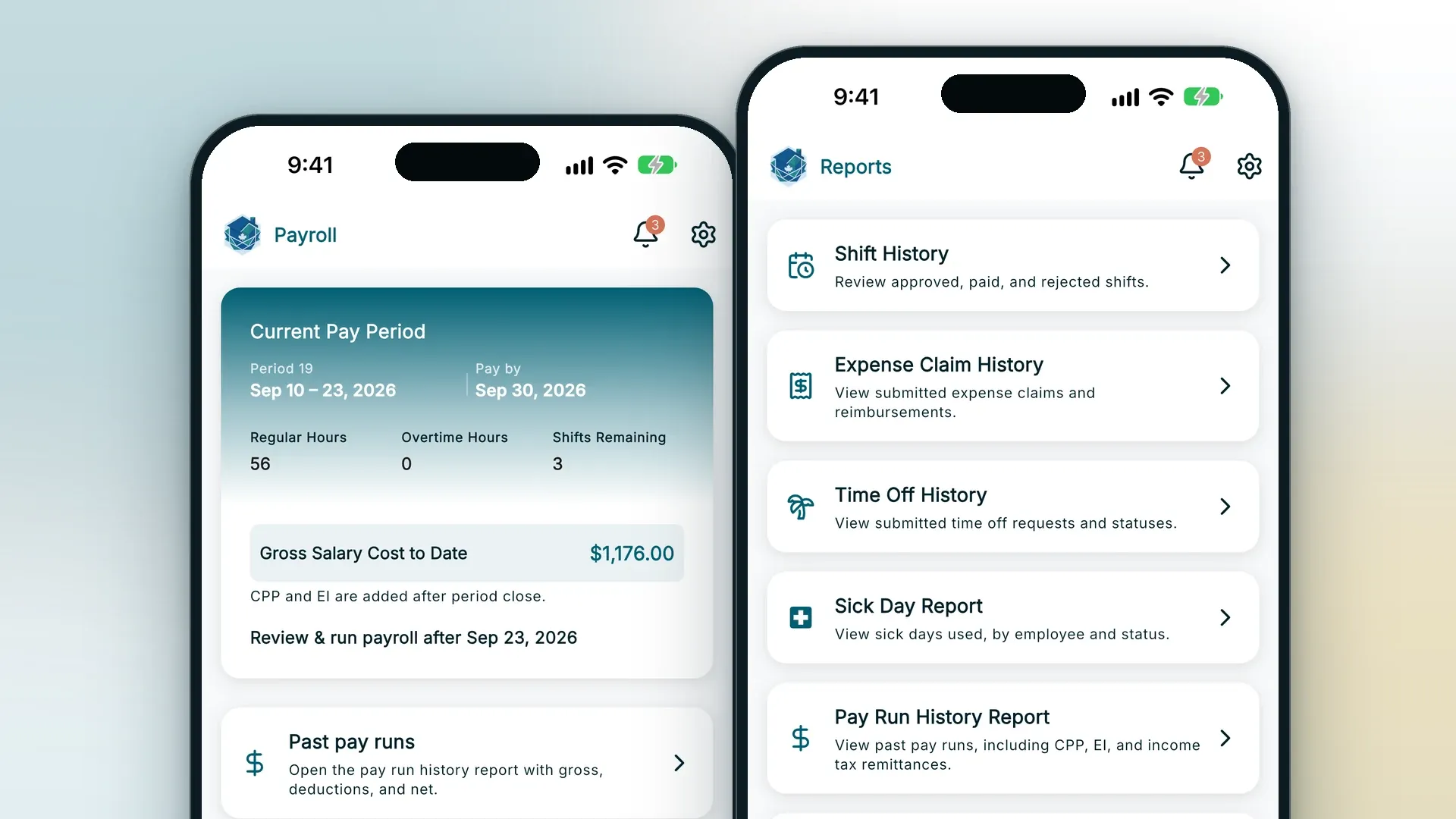
RoostPay is a caregiver payroll app that calculates these amounts for you. At the end of each pay period, you get the amount to pay your caregiver and the amount to remit to the CRA. You still send that money yourself. The hard part is done.
Vacation pay, statutory holidays, and year-end slips
Your province’s employment standards set the rules on vacation pay, statutory holidays, and what has to appear on a pay stub. Keep records from the first pay period.
- At year-end: issue a T4 to your caregiver
- When the job ends: issue a Record of Employment (ROE) so they can apply for EI, when the work was insurable
Do you need workers’ compensation coverage?
It depends on your province and on what your caregiver mainly does.
| Role or province | What the work looks like | Coverage |
|---|---|---|
| Ontario (WSIB): domestic employee | What the work looks like General household work, such as cleaning or child care | Coverage Mandatory once they average more than 24 hours a week. Register within 10 calendar days of hiring. |
| Ontario (WSIB): attendant | What the work looks like Personal or physical care, such as bathing or grooming, for an older or ill person | Coverage Not required when a private individual employs them directly. Optional coverage is available. |
| British Columbia (WorkSafeBC) | What the work looks like Ongoing home services that include a home health worker | Coverage Generally required once the worker is on for 8 or more hours a week. |
More detail on registering as a household employer: domestic employer registration in BC and Ontario .
Can you pay a family member to care for your parent?
This usually comes up when an adult child, or another family member, is the one providing the care. The answer depends on which deduction you mean.
| Deduction | Does it apply to a relative? | Worth knowing |
|---|---|---|
| EI | Does it apply to a relative? Generally no, unless the CRA would conclude you and that person would have agreed to similar terms if you weren’t related | Worth knowing Not an automatic exemption. The related-person test, below, decides it. |
| CPP | Does it apply to a relative? Usually yes. CPP doesn’t use the related-person test | Worth knowing A spouse or common-law partner is sometimes excepted. |
Ask the CRA for a ruling if your situation isn’t clear-cut, rather than assuming CPP or EI always or never applies to a family caregiver. The exceptions are specific.
Sharing caregiver payroll with a sibling or power of attorney
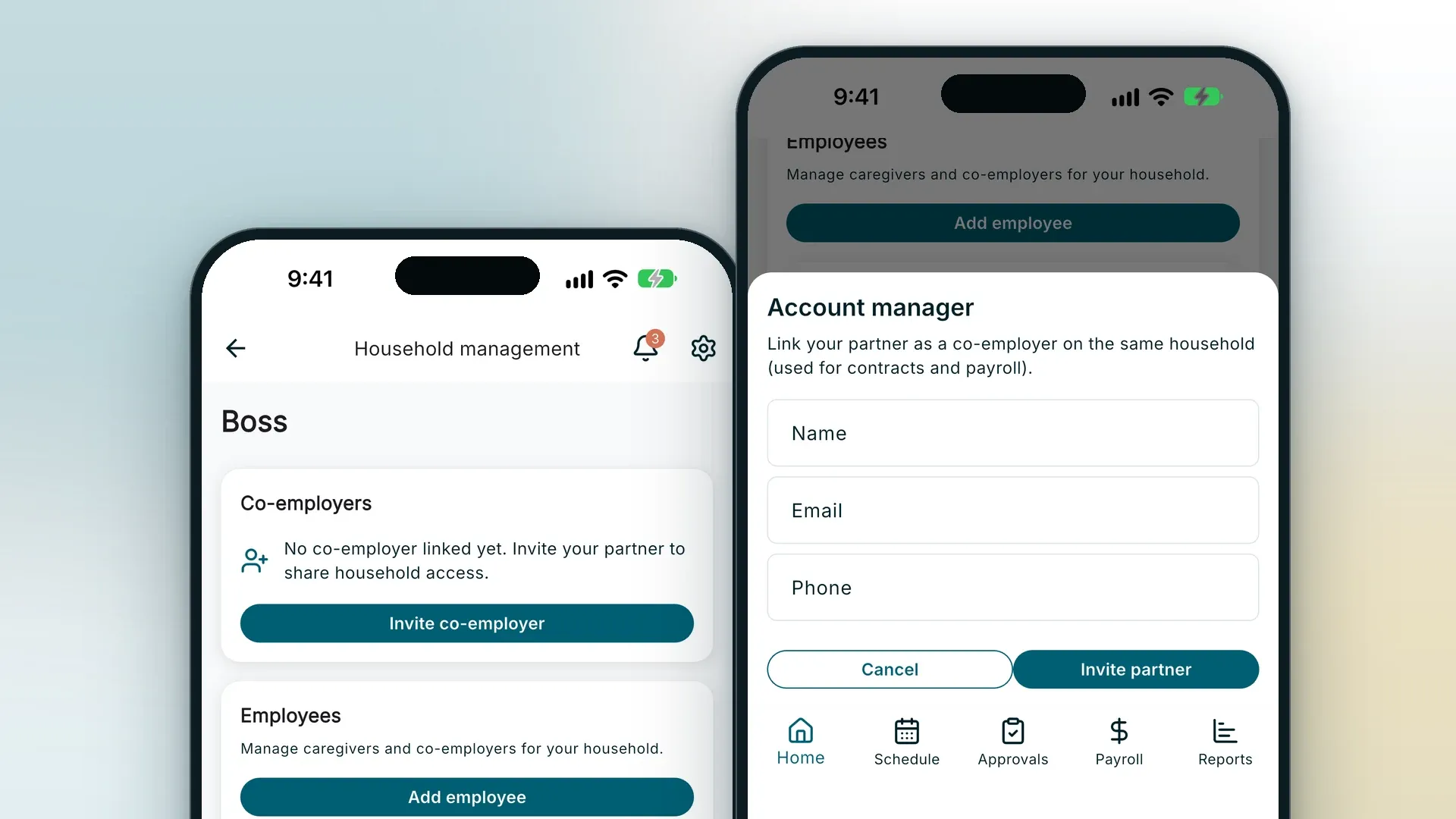
An adult child often ends up running caregiver payroll for a parent, sometimes from another city. RoostPay lets you give a second family member, such as a sibling, or a power of attorney the same access as the household employer, so the person on the account isn’t stuck doing every pay run alone.
That second person can do every task the first person can, including:
- Scheduling shifts
- Running caregiver payroll
- Calculating CPP, EI, and income tax remittances
- Adding a new caregiver
Put it in writing
A short written agreement protects both of you. Cover the duties, schedule, wage, pay frequency, vacation, notice, and who has a key to the house.
If you are hiring in Ontario, our guide to hiring a private PSW walks through a full hiring checklist. The private caregiver cost calculator shows what a wage actually costs you once CPP, EI, and vacation pay are added in.

How RoostPay Helps with Caregiver Payroll
-
RoostPay handles
Payroll calculations (CPP, CPP2, EI, income tax, vacation pay)You stay in charge
Pay your caregiver from your own bank account -
RoostPay handles
Deduction and remittance amountsYou stay in charge
Remit those amounts to the CRA yourself -
RoostPay handles
Pay stubs, T4s, and ROEsYou stay in charge
Workers’ comp registration and premiums, if your province requires it -
RoostPay handles
One flat plan if you employ more than one caregiverYou stay in charge
Keeping your written employment agreement up to date
RoostPay calculates each pay run, shows you what to remit, and prepares the pay stubs, T4s, and ROEs so you can pay your caregiver and send the CRA what is owed.
Compare Full Access for one caregiver or several.
Caregiver payroll pricingRelated caregiver payroll guides
Run payroll for your parent’s caregiver without the spreadsheet
One plan, unlimited employees. $24/month or $228/year.
No charges for 30 days · Cancel anytime
Not ready to start? Get caregiver payroll tips by email.
Get RoostPay Insights newsletter
Frequently asked questions
Do I need to register with the CRA to pay a caregiver for my mom or dad?
If you hire the caregiver, set their hours, and supervise the work, the CRA generally treats you as their employer. That means registering for a payroll account and calculating CPP, EI, and income tax when they apply. Get a CRA ruling if you are unsure.
Can I pay my parent’s caregiver in cash?
You can pay a caregiver in cash, but you still need to withhold and remit when the rules say you are the employer, and you still need to keep records. Undocumented cash pay is what gets families into trouble, not cash itself. We recommend an e-transfer or a cheque, so you have a paper trail for each payment.
Can I pay a sibling or other family member to help care for my parent?
Often yes, but the tax rules are not automatic. EI usually does not apply to a related person unless the CRA would treat the arrangement as arm’s length. CPP still applies to most paid relatives, though spouses and common-law partners are sometimes excepted. Ask the CRA for a ruling if it is not clear.
Can my brother, sister, or power of attorney help run payroll for our parent?
Yes. RoostPay lets you give a second family member or a power of attorney the same access as the household employer. They can schedule shifts, run payroll, calculate CPP, EI, and income tax remittances, and add a caregiver.
Do I need WSIB or WorkSafeBC coverage for a private caregiver?
It depends on the role and the province. In Ontario, a caregiver who mostly does personal care counts as an attendant, and a private individual employing one is not required to register with WSIB. A caregiver doing regular housekeeping alongside care looks more like a domestic employee, which is mandatory over 24 hours a week. In BC, WorkSafeBC generally requires coverage for a home health worker at 8 or more hours a week.
What happens when my caregiver stops working for us?
Issue a final pay stub and, when the employment was insurable, a Record of Employment so your caregiver can apply for EI. You will also need to include their pay on a T4 for the year.
How much does a private caregiver actually cost me?
More than the hourly wage. You are also on the hook for employer CPP and EI, vacation pay, and possibly workers’ compensation. Use the private caregiver cost calculator to see your true hourly and monthly number before you agree on a rate.
Does RoostPay pay my caregiver or send money to the CRA for me?
RoostPay works out the exact amounts and gives you pay stubs, T4s and ROEs, so you pay your caregiver by e-Transfer or through your own bank and remit to the CRA.
Sources
- CRA, employing a caregiver, baby-sitter, or domestic worker
- RC4110, employee or self-employed
- CRA, hiring a family member or a related person
- WSIB, industry-specific coverage
- WorkSafeBC, homeowners
Last updated: 2026-09-25. This page is general information for families hiring a caregiver privately. It is not tax, legal, or insurance advice. Confirm your situation with the CRA, your provincial workers’ compensation board, and your employment standards office.